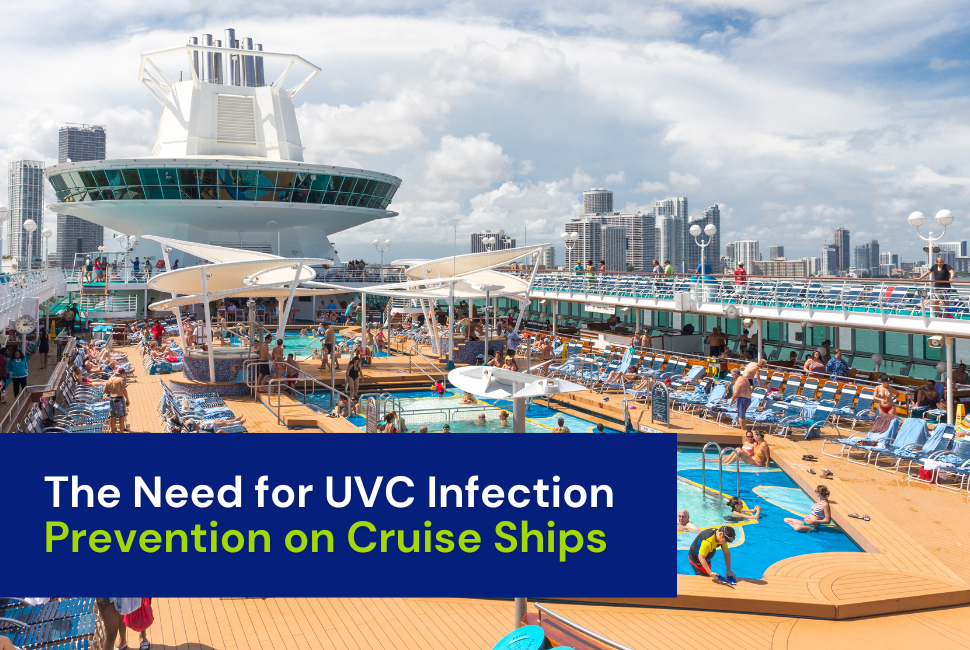
According to the CDC’s Vessel Sanitation Program (VSP), person-to-person contact is the most common pathway for illness aboard cruise ships, followed by contaminated food and water. Pathogens can spread quickly via high-touch surfaces like handrails, elevator buttons, shared restrooms, and buffet utensils. While the cruise industry adheres to strict health codes, and the CDC conducts regular ship inspections, outbreaks still occur, especially involving gastrointestinal illnesses like norovirus and respiratory infections such as COVID-19 or measles.
Why Traditional Cleaning Isn’t Always Enough
The VSP plays a critical role in monitoring and inspecting cruise ships to ensure sanitation standards are met. However, the nature of high passenger turnover, communal spaces, and global travel means ships face persistent exposure to new pathogens. The CDC recommends layered disinfection strategies, particularly in the face of airborne illnesses and hard-to-kill viruses.
This is where UVC disinfection offers a powerful complement to manual cleaning and chemical-based sanitation. UVC light has been shown to inactivate a broad spectrum of pathogens — including norovirus, influenza, C. difficile, and SARS-CoV-2, on both surfaces and in the air. It reaches into high-touch, high-traffic zones where traditional methods may miss, and it does so without the need for harsh chemicals or long downtime.
Supporting Safer Sailing with UVC Technology
UVC systems can play a key role in reinforcing cleanliness across a cruise ship’s most vulnerable areas:
Guest cabins and restrooms
Dining and food prep areas
Onboard clinics and isolation zones
Shared crew quarters and staff break areas
Recreation spaces like gyms, spas, and lounges
Finsen Tech provides a range of UVC solutions designed to fit each of these environments, from portable units that can move between cabins and staff zones, to fixed systems for high-traffic corridors, to HVAC-integrated options that target air handling at the source. These tools are not a replacement for cleaning, but a much-needed second layer that supports safer cruising for both guests and crew.
As global travel continues to rebound, infection prevention on cruise ships must evolve beyond surface wipes and hand sanitizer. UVC disinfection is a science-backed solution that can help reduce transmission, minimize outbreaks, and build passenger confidence.
Learn more about how we support infection prevention across industries:
https://finsentech.com/industries/
Read the full CDC article on the Vessel Sanitation Program:
https://www.cdc.gov/vessel-sanitation/about/index.html